
The Project Pehchaan Logo
pehchaan.

VARANASI'S MEMORY, KEPT ALIVE

The Third Eye

Public Economics, Policy Commentary & Field Observations.

EDITORIAL DIRECTOR: ADITI ANAND FREQUENCY: BIWEEKLY DISPATCH VOLUME: 02
ESSAY DISPATCH // FOCUS REPORT

Out of Sight, Out of Bite

PUBLISHED: MID JULY 2026 READ TIME: 6 MIN FIELD: URBAN ECONOMICS
Out of Sight, Out of Bite Cover

As Varanasi relocates nearly 400 meat shops to the city's outskirts, Project Pehchaan combines field research with urban economics to ask a simple question: what happens when a market is moved away from the people who sustain it?

Varanasi may be Shiva's city, but it is also a city that has inherited something of Shiva's fearlessness: a capacity to accommodate contradictions. Priests and weavers, pilgrims and traders, Sanskrit scholars and silk merchants, vegetarians and meat-eaters have shared the same gallis for centuries. Banaras has never belonged to one community alone. Its character emerges from the coexistence of many.

The Varanasi Municipal Corporation's decision to relocate nearly 350–400 meat, fish, poultry and egg shops to the city's outskirts is therefore more than an administrative measure. It is a decision that reshapes the everyday economy of Banaras.

The administration has justified the move on three grounds: sanitation, improved waste management and preserving the religious and cultural character of one of India's most important temple cities. These are legitimate objectives. The question, however, is not whether they are desirable, but whether relocation is the most effective and least costly way of achieving them.

Economists often speak about price, but they speak just as often of location. In The Undercover Economist, Tim Harford argues that some of the most valuable things in an economy are not products, but places. Businesses survive because they are close to customers. Location itself creates value.

Banaras has long understood this instinctively. Markets emerge where people gather because proximity creates convenience. Economists describe this as agglomeration: businesses benefit from locating near one another, creating ecosystems built not only on transactions but on years of familiarity, trust and routine.

The relocation proposal disrupts precisely that relationship.

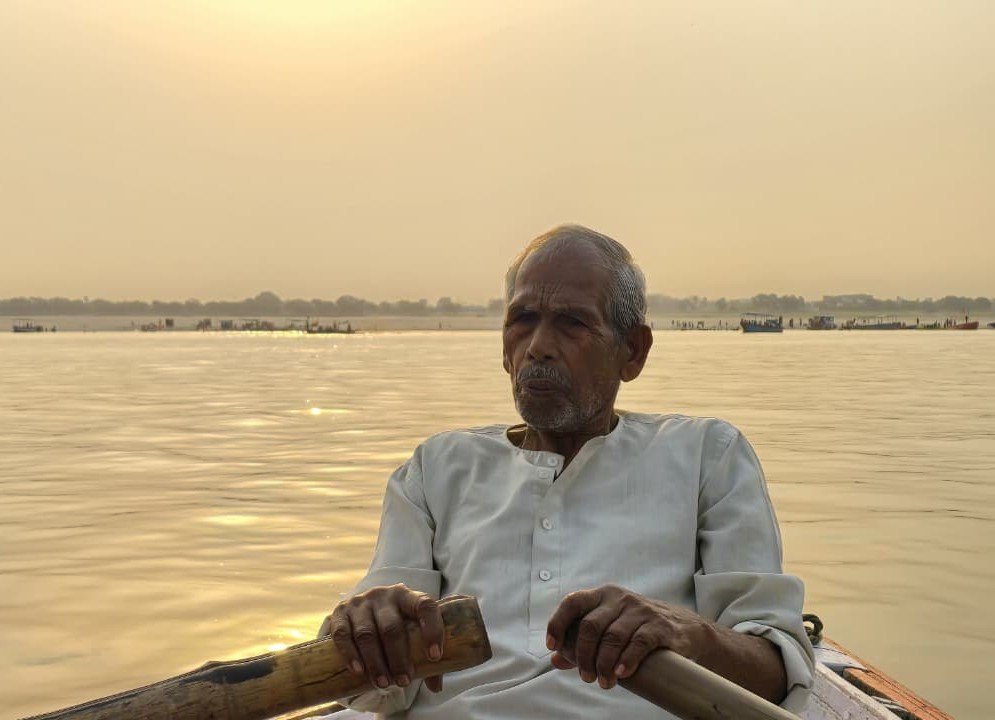
Evidence from the ground reflects these concerns. During a recent field interview conducted as part of Project Pehchaan's research, Shuban interviewed a meat shop owner who has operated his business since 2003. Reflecting on the proposal, the shopkeeper remarked,

"असर तो आएगा। असर क्यों नहीं आएगा?... कस्टमर को दिक्कत पड़ेगी, और दुकानदार को भी होगी ही।"

"There will definitely be an impact. Why wouldn't there be? Customers will face difficulties, and so will shopkeepers."

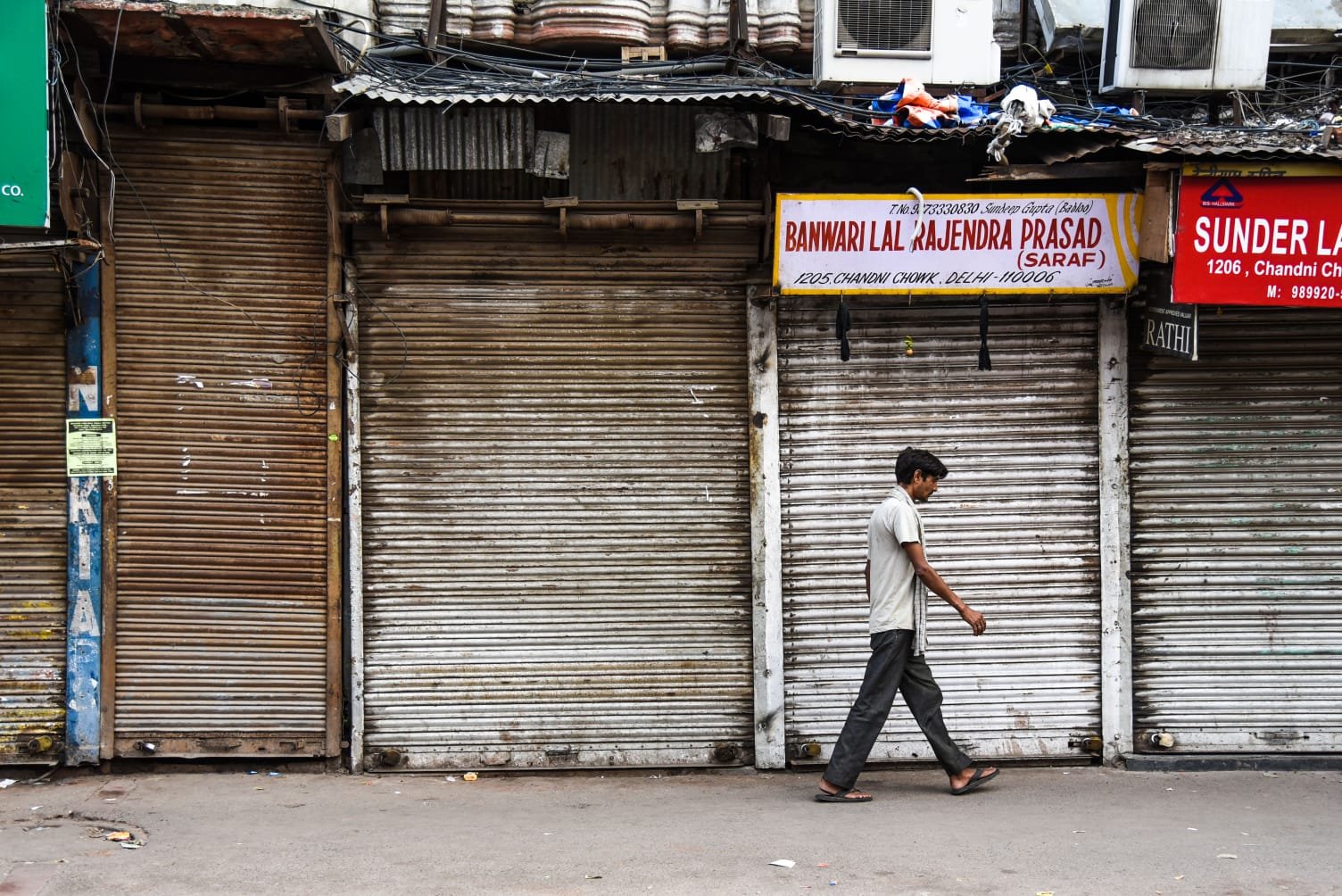
For many residents, buying fish, eggs or chicken is not an occasional trip but an ordinary neighbourhood purchase. Moving these shops to Ramnagar, Shivpur, Sujabad or Awaleshpur increases the cost of access. Not necessarily the price of meat itself, but the cost of reaching it. Economists call this a transaction cost.

The shopkeeper explained the concept more simply than any economics textbook could:

"अवलेशपुर से लेना होगा सबको ... अब लंका वाले को दिक्कत तो आएगी ही.. दूर पड़ेगा। जाने से पहले २ बार सोचेंगे।"

"If someone has to come from Lanka to Awaleshpur, they'll think twice. It's far. They'll wonder if it's worth going at all."

Convenience shapes demand more than we often realise. A modest increase in travel time may not eliminate demand, but it can reduce its frequency. The result is not merely displaced commerce, but diminished commerce.

The burden of this adjustment is unlikely to be shared equally. Large restaurants, organised retailers and delivery platforms possess logistics networks and financial resilience. Small neighbourhood vendors possess something far more fragile: location.

This raises a question that has received surprisingly little attention: who benefits from moving these markets?

If neighbourhood vendors lose customers because of distance, those customers do not simply disappear. Some may shift towards larger retailers with stronger supply chains. Policies that appear spatially neutral often produce unequal competitive outcomes. The question, therefore, is not whether commerce survives, but whose commerce survives.

Equally significant is the uncertainty surrounding implementation. Asked whether the administration had offered compensation, assistance or detailed information, the shopkeeper responded plainly:

"कुछ नहीं दिया गया... और कुछ पता भी नहीं है।"

"Nothing has been provided... nobody has told us anything."

Good economics distinguishes between a problem and its source. If unhygienic slaughtering, waste disposal and food safety are the issues, policy should target hygiene itself. Relocation changes where meat is sold, not necessarily how it is sold. Without better sanitation infrastructure, refrigeration, waste management and stricter enforcement of food safety standards, the problem merely changes address.

Banaras has always evolved. Its greatest strength has never been uniformity but its ability to absorb differences without erasing them.

Relocating meat shops does not necessarily reduce the demand for meat; it simply alters the cost of obtaining it. Whether consumers travel farther, shift towards organised retailers or reduce consumption altogether remains an empirical question rather than a moral one. Public policy should ultimately be judged by its measurable consequences, not merely by its symbolism.

Interestingly, the vendors interviewed did not frame the issue as one of defiance. When asked about the government's decision, the shopkeeper replied,

"सरकार का जो नियम रहेगा, उसका पालन करना पड़ेगा।"

"Whatever the government's rule is, we will have to follow it."

His concern was not regulation itself, but whether a market separated from the neighbourhoods it serves can continue to function as a market at all.

Every public policy involves trade-offs. Cleaner streets and better waste management are worthwhile goals, but every benefit carries a cost. In this case, the policy redistributes convenience. For pilgrims, the city may appear cleaner and more orderly. For neighbourhood vendors and ordinary households, everyday transactions become more expensive.

Urban redevelopment often treats space as empty land waiting to be redesigned. Economically, however, cities are built not merely from roads and buildings, but from repeated human interactions. Every familiar shop and returning customer represents accumulated economic capital. Buildings can be relocated in months. Trust and habit often take decades to rebuild.

The debate over meat shops is therefore larger than meat itself. It is about whether Banaras will continue to be shaped by the lived realities of its people, or increasingly by an idealised image of what the city ought to look like.

Because when a city begins moving its markets to the margins, it must ask itself a difficult question:

"Are we merely changing the geography of commerce, or are we changing who gets to participate in it?"

And if every urban policy redistributes opportunity, then another question inevitably follows: who are we taking from, and who are we giving to?

PEHCHAAN JOURNAL SERIES VOL. II // MID JULY 2026
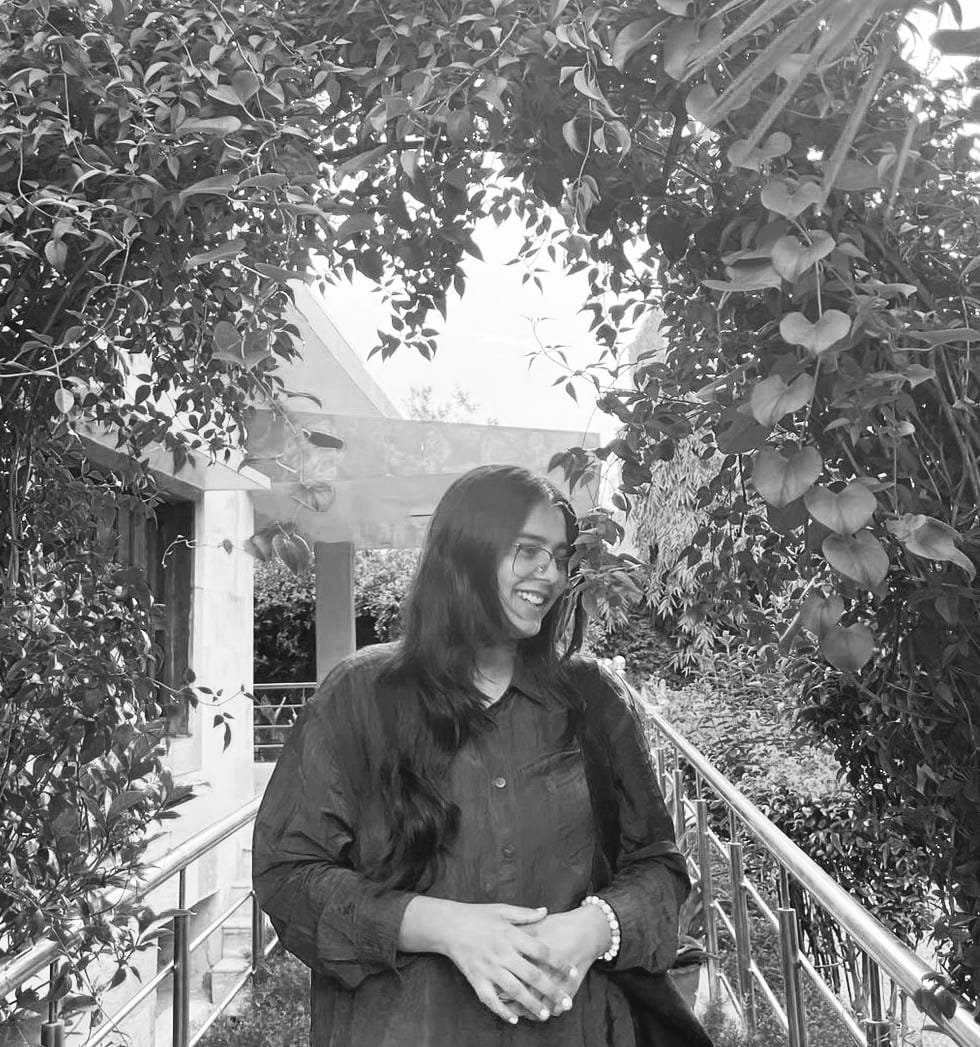
Aditi Anand-Mishra

Aditi Anand-Mishra

EDITORIAL DIRECTOR

Economics enthusiast. Professional overthinker fueled by coffee. Amateur detective of public policy. Aditi can turn a road project into a debate on urban planning and a temple corridor into a discussion about incentives. At The Third Eye, she spends her days turning everyday observations into uncomfortable questions and surprisingly good stories. Varanasi just happens to have thousands of those stories hiding in plain sight. If she’s done her job well, you’ll leave with a few new perspectives, a handful of unanswered questions, and a curiosity to look at the city a little differently. Which, in her view, is exactly the point.
JOURNAL DIRECTORY

Editorial Archive

Explore previous and active issue dispatches of the chronicle.

VOL. I // LATE JUNE 2026

The Anatomy of Belief

An exploration into the hidden economic networks and generational supply chains that sustain the spiritual capital of the city.

VOL. II // MID JULY 2026

Out of Sight, Out of Bite

As Varanasi relocates nearly 400 meat shops to the city's outskirts, Project Pehchaan combines field research with urban economics to ask what happens when a market is moved away from the people who sustain it.

VOL. III // LATE JULY 2026

Monsoon Economics

Analyzing how Kashi's seasonal river patterns, ghat flooding, and localized rains reshape daily livelihoods and informal economies.